












Breast Health Deserves More Than a Pink Ribbon: Let's Talk About Prevention
Every October, the world turns pink.
Pink ribbons on cereal boxes. Pink labels on beauty products. Pink drinks. Pink desserts. Pink workout clothes. Entire store displays dedicated to breast cancer awareness.
And every October, functional and holistic health practitioners everywhere probably gain a few more gray hairs.
Because here's what we cannot wrap our heads around:
How are we still putting pink ribbons on deep-fried, highly processed, seed-oil-laden, chemical-filled products and calling it breast cancer awareness?
We're putting symbols of women's health on products we should be encouraging women to think more critically about consuming.
And somehow, that's supposed to be progress?
We understand the importance of raising awareness, supporting research, honoring survivors, and remembering the women we've lost. Those things matter tremendously.
But we wish we spent even HALF as much time educating women about how to support their bodies and reduce their risks as we do selling them pink merchandise.
Because there's a conversation that deserves far more attention every October.
Detection and prevention are not the same thing.
A mammogram is a screening tool. Its purpose is to identify possible cancer, ideally before symptoms develop. It doesn't prevent cancer from developing.
Think about a smoke detector. It alerts you when there's smoke, but it doesn't stop a fire from starting.
Or the check-engine light in your car. It tells you something needs attention, but it didn't prevent the problem.
Early detection is valuable. It can save lives.
But why are we waiting until something goes wrong to have serious conversations about what women are putting into and onto their bodies every single day?
Here's something I hear far too often from women who have faced a cancer diagnosis and subsequently explored functional medicine, whether alongside conventional treatment or as part of their own wellness journey.
They start learning about environmental exposures. Hormones. Inflammation. Metabolic health. The gut. The liver. The ingredients in their food, skincare, fragrances, and household products.
And suddenly, they're looking at their entire lives differently.
Not necessarily because they've discovered exactly what caused their cancer. Often, that simply isn't possible.
But because they're learning things about their bodies that they wish someone had explained decades earlier.
We don't know what we don't know.
We think, "It's just a little fragrance in my perfume."
"It's just a little of whatever is in my lotion."
"It's just a bag of chips."
"It's just one more ultra-processed snack."
But how often do we stop to consider the bigger picture?
The products we use every morning. The products we use every night. The foods we eat repeatedly. The substances we're exposed to at home, at work, and in our environment.
One exposure doesn't tell the whole story. Neither does one ingredient.
But repeated exposures, their cumulative effects, and how different substances interact are legitimate areas of scientific concern and research.
And when you start looking at everything together, the number of exposures can be eye-opening.
Our bodies have remarkable systems for processing and eliminating substances. But that doesn't mean every exposure is harmless, or that we should ignore the ones we can reasonably reduce.
We often talk about the body waving a white flag.
For one woman, that might look like persistent fatigue or digestive problems. For another, it might be hormonal symptoms or metabolic changes. And sometimes, a serious diagnosis forces someone to ask questions she never knew she needed to ask.
Those symptoms and diagnoses don't all share the same cause. But they can become a turning point in how someone approaches her health.
And that's what makes this conversation so important.
Why should a life-changing diagnosis be the first time a woman learns to ask these questions?
Why aren't we teaching women about environmental health, nutrition, hormones, movement, and modifiable cancer risks long before they're sitting in an examination room hearing words they never imagined they'd hear?
Not every case of breast cancer can be prevented. And no woman should ever be made to feel responsible for developing it.
But that doesn't make prevention education any less important.
We cannot control every risk factor.
We can, however, do a much better job of educating women about the ones they may be able to influence.
And THAT is the conversation we want to have.
What Does Supporting Breast Health Actually Look Like?
Here's something that might surprise you.
Most of the foundational habits that support breast health aren't particularly glamorous.
They don't come in pink packaging.
They don't require a month-long marketing campaign.
And many of them are things we've been encouraging women to prioritize all along.
1. Know Your Breasts. Know What's Normal for YOU.
Your breasts naturally change throughout your life.
Hormonal fluctuations during your menstrual cycle, pregnancy, breastfeeding, perimenopause, and menopause can all affect how breast tissue looks and feels.
The goal isn't to spend every day searching for something wrong.
It's to become familiar enough with your body that you recognize when something changes.
Pay attention to new lumps, unusual thickening, nipple changes, skin dimpling, unexpected discharge, or persistent changes that don't resolve.
You know your body better than anyone.
And when something changes, it deserves attention.
2. Move Your Body. Regularly.
Walk. Swim. Strength train. Dance in your kitchen. Garden. Play pickleball.
We don't care what movement looks like for you. We care that you're doing it consistently.
Physical activity is one of the most extensively studied lifestyle factors associated with reduced breast cancer risk.
Research has found that women with the highest levels of physical activity have approximately 12–21% lower breast cancer risk compared with the least active women.
Movement supports multiple systems that matter for women's health:
- Healthy insulin regulation and metabolic function
- Hormonal health
- Healthy body composition
- Inflammatory balance
- Cardiovascular health
- Emotional well-being
- Lymphatic drainage
You don't have to become a marathon runner.
Start walking after dinner. Pick up some weights. Find something you enjoy enough to continue doing.
Your body was designed to move.
3. Eat More Fiber. And Yes, We're Going to Talk About Poop.
We talk about bowel movements a lot around here.
And we're not stopping now.
Fiber supports digestive health, feeds beneficial gut bacteria, and helps promote regular elimination.
It also plays a role in how the body processes and eliminates certain hormone metabolites.
Your liver metabolizes estrogen, and some of those metabolites are released into the digestive tract for elimination.
Your gut microbiome can influence whether certain estrogen compounds are reabsorbed.
This is one reason researchers are interested in the relationship between the gut microbiome, estrogen metabolism, and women's health.
We love seeing women work toward approximately 30–35 grams of fiber daily, increasing gradually as their digestive systems adjust.
Vegetables. Berries. Beans. Lentils. Chia seeds. Flaxseed. Whole foods.
And please, drink your water.
Regular bowel movements are an important part of healthy digestion and waste elimination.
If you're constantly bloated, uncomfortable, or struggling with constipation, don't simply accept that as your normal.
4. Your Liver and Gut Deserve Some Attention
Your liver is one of the hardest-working organs in your body.
It participates in hundreds of essential functions, including processing nutrients, metabolizing hormones, and transforming substances for elimination.
Your kidneys help filter waste from the bloodstream, while your digestive system plays its own role in eliminating waste.
These systems work together.
And they don't suddenly become important when something goes wrong.
Supporting them is part of caring for your health every day.
That starts with adequate hydration, nutrient-dense foods, fiber, regular movement, sufficient sleep, and being mindful of alcohol consumption.
We also believe in looking at the whole picture rather than treating each body system as though it operates independently.
5. Let's Have an Uncomfortable Conversation About Alcohol
We know.
This isn't everyone's favorite topic.
But if we're going to talk seriously about breast cancer prevention, we cannot leave alcohol out of the conversation.
Alcohol consumption is an established, modifiable breast cancer risk factor.
Women who consume approximately one alcoholic drink daily have been found to have about a 7–10% higher breast cancer risk compared with nondrinkers.
At two to three drinks daily, that increase is approximately 20%.
Alcohol can affect estrogen levels, and its metabolism produces acetaldehyde, a compound that can damage DNA.
Does that mean we're here to judge anyone for enjoying a glass of wine?
Absolutely not.
But informed decisions require information.
And women deserve to understand the relationship between alcohol and breast health so they can make choices that align with their priorities.
6. Reduce Unnecessary Chemical Exposure
This is where the conversation gets particularly frustrating for those of us who have spent years advocating for cleaner ingredients.
We're surrounded by products we use without giving them much thought.
Skincare. Makeup. Sunscreen. Deodorant. Fragrance. Laundry products. Household cleaners. Food packaging.
Some chemicals used in consumer products have endocrine-disrupting properties, meaning they can interfere with hormone signaling.
Researchers continue to investigate how different exposures, combinations, and exposure levels may affect long-term health, including breast health.
We believe women deserve to know what's in the products they use.
You don't need to throw everything in your house away overnight.
Start with the products you use most frequently.
Read ingredient lists. Learn about fragrance ingredients. Consider reducing unnecessary exposures to substances of concern. Choose products with transparent formulations.
And make gradual changes that you can maintain.
7. Your Hormones Are Part of a Much Bigger Picture
When women hear the phrase hormone balance, they often think exclusively about estrogen and progesterone.
But your endocrine system is far more interconnected than that.
Estrogen. Progesterone. Insulin. Thyroid hormones. Cortisol.
These hormones influence everything from your menstrual cycle and metabolism to your energy, sleep, and stress response.
And they're affected by factors including age, nutrition, body composition, physical activity, and overall health.
Estrogen exposure is particularly relevant to breast cancer research because certain breast cancers are hormone-sensitive.
But that doesn't mean estrogen is bad.
Estrogen is essential to women's health.
The goal isn't to eliminate it. It's to understand how your hormonal systems function and recognize when something may need attention.
If you're experiencing persistent fatigue, dramatic cycle changes, unusual symptoms, or significant changes during perimenopause, don't automatically dismiss everything as just part of being a woman.
Ask questions.
Consider whether testing is appropriate for your symptoms and stage of life.
Understand your personal patterns.
Some functional wellness practitioners use comprehensive hormone testing, including urine-based hormone metabolite panels such as DUTCH testing, to explore patterns. The insight these tests provide is truly invaluable.
8. Wear a Bra That Actually Fits
Give the girls a little breathing room!
Whenever possible, choose bras without underwire and look for natural, breathable materials.
Most importantly, pay attention to how your bra fits. If it's digging into your shoulders, leaving deep marks, or putting constant pressure on your breast tissue, it might be time to find something more comfortable.
Your bra should support you, not squeeze the life out of you!
9. Breastfeeding Has Another Interesting Health Benefit
Breastfeeding has been associated with a lower risk of breast cancer later in life.
Researchers believe several biological factors may contribute, including changes in lifetime hormone exposure and breast tissue.
It's one of the many fascinating ways reproductive history can influence long-term health.
But this is never a reason for guilt.
Not every woman can breastfeed. Not every woman chooses to. And some women never have children.
Breast health isn't a competition or a checklist of decisions you were supposed to make.
It's about understanding the factors that influence risk and making informed choices wherever you can.
What About Breast Imaging?
We aren't fans of the idea that breast health begins and ends with mammograms.
A screening method that involves significant breast compression and exposure to ionizing radiation, potentially repeated over decades, shouldn't be the entire conversation about breast health.
Women deserve to know what other technologies exist, how they work, and what information they can provide.
There are several methods used to evaluate breast tissue, including clinical breast exams, ultrasound, QT imaging, breast CT, MRI, contrast-enhanced mammography, molecular breast imaging, and thermography.
And if you're a woman with dense breast tissue, which includes nearly HALF of women over age 40, this conversation is especially important.
Dense tissue appears white on a mammogram. So can many breast cancers, making certain abnormalities more difficult to identify.
Different technologies provide different information, and not every option is appropriate for every woman or every situation.
But shouldn't women at least know what their options are?
We believe women deserve education, choices, and meaningful conversations about their breast health, not simply a one-size-fits-all approach.
Meet Dr. Jennifer Simmons: A Different Approach to Breast Health
One woman whose work we believe deserves far more attention is Dr. Jennifer Simmons.
Dr. Simmons spent 17 years as a premier breast surgeon in Phialdelphia before her own cancer diagnosis led her to explore functional medicine and reconsider how we approach breast health.
Today, she's an integrative oncologist, author, educator, and founder of PerfeQTion Imaging & Wellness, where her focus extends beyond detecting disease to understanding the factors that influence women's health.
Her work is especially interesting because she's helping introduce women to different breast imaging technologies.
One of those is the QT Scan at PerfeQTion Imaging.
Unlike mammography, QT imaging uses sound waves to create detailed three-dimensional images of breast tissue without radiation or compression. The scan is performed while the breast rests in warm water, allowing tissue to be imaged in its natural shape.
It's an approach worth learning about, particularly for women interested in understanding radiation-free imaging options.
An At-Home Breast Health Test Using Your Tears?
Now THIS is something we wish more women knew about!
During the podcast with Dr. Jennifer Simmons, I learned about the Auria Breast Health Test, an at-home test that uses a small tear sample to measure biomarkers associated with breast health.
Dr. Simmons shared that she uses this test with patients who have no history of breast cancer as an initial step in her approach to breast health.
Based on their results, she determines whether additional evaluation is appropriate, which may include the QT breast imaging offered at her practice.
What we find so exciting is the opportunity to begin exploring breast health from the comfort of your own home, with a simple, noninvasive test that doesn't involve breast compression or radiation.
The tear test doesn't diagnose breast cancer, but it can provide information to help guide the next conversation.
And that's exactly why we want women to know these options exist.
More education. More choices. More opportunities to take an active role in your breast health.
The Podcast We Believe Every Woman Should Hear
And finally, we want to share something that genuinely changed our perspective on breast cancer and the conversations surrounding it.
Watch the podcast featuring Dr. Jennifer Simmons on YouTube.
We believe every woman deserves the opportunity to hear different perspectives, learn about emerging technologies, ask questions, and make informed decisions about her own body.
You don't have to agree with every perspective to benefit from becoming more educated.
Ask questions. Learn about your breast density. Know your personal and family history. Explore the benefits and limitations of your options.
Because breast health should never be reduced to a single test, a single conversation, or a single month of awareness.
You deserve to understand your body and participate in the decisions that affect it.
And Now, Can We Talk About All Those Pink Ribbons?
Because this is the part that makes us want to scream every October.
We're going to say something that might make a few companies uncomfortable.
Putting a pink ribbon on junk food doesn't make it healthy.
Putting a pink ribbon on a highly processed snack doesn't erase its ingredients.
Putting a pink ribbon on a deep-fried product doesn't magically transform its nutritional value.
Putting a pink ribbon on a heavily fragranced beauty product doesn't answer questions about its formulation.
And putting a pink ribbon on something loaded with ingredients consumers are actively trying to avoid doesn't automatically make it a meaningful contribution to women's health.
A donation attached to a purchase may support a worthwhile cause. That's valuable.
But the donation and the healthfulness of the product are two completely different conversations.
We can support cancer research and still question the marketing.
We can honor survivors and still challenge companies to do better.
We can appreciate awareness campaigns and still ask why practical risk-reduction education isn't receiving just as much attention.
Because awareness should be the beginning of the conversation.
Not the entire conversation.
Supporting Your Body Beyond October: Our No Crap In It Favorites
We spend a lot of time talking about what women can do to take a more proactive approach to their health. And while no supplement or skincare product can guarantee disease prevention, we believe the everyday choices you make deserve attention.
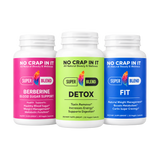
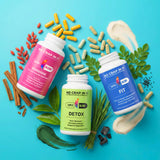
That's why we wanted to share a few No Crap In It favorites that fit into the bigger conversation about digestive health, hormone wellness, supporting the body's natural elimination processes, and being more intentional about ingredients.
Parasite Cleanse Bundle | Gut Health & Elimination
Remember our conversation about fiber, regular bowel movements, and why healthy elimination matters?
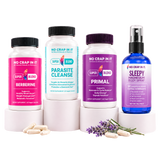
This is where our Parasite Cleanse Bundle comes into the picture!

If you're working with a functional or holistic provider while navigating a diagnosis like breast cancer, or many other chronic health concerns, parasite cleansing may be part of the conversation. Some practitioners incorporate seasonal cleansing protocols two to four times per year, depending on their individual approach.
Our Cleanse formula is designed to support bowel regularity and healthy elimination, helping you stay consistent with one of the most important parts of digestive wellness.
Pair that with fiber-rich whole foods, plenty of water, and daily movement, and you're giving your digestive system the attention it deserves.
Because yes, we're going to keep talking about poop. It's that important!
K&L | Kidney & Liver Support
Your liver and kidneys work hard for you every single day.

Your liver plays an important role in hormone metabolism and processing substances for elimination, while your kidneys help filter waste and maintain fluid balance.
Our K&L formula was created with these hardworking organs in mind, offering herbal support for your everyday kidney and liver wellness routine.
Think of it as another piece of the bigger picture alongside hydration, nourishing foods, movement, and adequate rest.
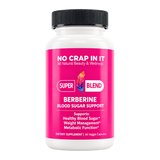
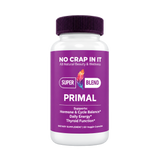
Primal + Wild Yam | Women's Hormonal Wellness
We spent quite a bit of time discussing hormones in this article, and for good reason!

Estrogen, progesterone, cortisol, insulin, and thyroid hormones are all part of an interconnected system that influences how we feel and function.
Our Primal and Wild Yam products are part of our women's wellness collection, designed for women who want to be more intentional about supporting their hormonal wellness through different stages of life.
Because hormone health deserves attention long before perimenopause or menopause enters the conversation.
Lymphatic Support | Lymph Butter & Lymphatic Supplement
Let's talk about a system that doesn't get nearly enough attention: your lymphatic system!
Your lymphatic system plays an important role in moving excess fluid out of tissues, transporting immune cells, and helping your body clear cellular waste. And here's something every woman should know: you have clusters of lymph nodes in your underarms, right next to your breasts!
Your lymph nodes help filter lymph fluid as it moves through this network. Unlike your circulatory system, your lymphatic system doesn't have a heart pumping fluid through it. It relies heavily on muscle movement, breathing, and the body's natural processes to keep things flowing.
That's why supporting healthy lymphatic circulation deserves a place in our everyday wellness conversations.
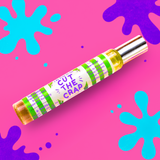
Our No Crap In It Lymph Butter and Lymphatic Supplement are two favorites for incorporating lymphatic wellness into your routine.

Pair your lymphatic care routine with daily movement, deep breathing, adequate hydration, and gentle massage.
Because breast health isn't just about breast tissue. It's about supporting the interconnected systems throughout your body, too!
Natural Skincare, Deodorant and Sunscreen
Remember when we talked about all those little exposures adding up over time?
Your morning routine alone might include face wash, moisturizer, deodorant, sunscreen, body lotion, hair products, and fragrance.

Now multiply that by every single day, year after year.
This is exactly why we're so passionate about knowing what's in the products we put on our bodies.
Our natural skincare, sunscreen, and Herb Log products offer options for women who want to be more intentional about their everyday routines and the ingredients they bring into their homes.
You don't have to replace everything overnight. Start by reading labels, asking questions, and making swaps that make sense for you.
Small, intentional changes can become lifelong habits. And that's what we're encouraging women to think about this October and every month after.
Explore our wellness favorites at nocrapinit.com.
What If We Made October About Action, Too?
Imagine if every October we spent as much time teaching women about their bodies as we do selling pink merchandise.
Imagine if conversations about breast health included:
- How physical activity influences cancer risk.
- Why fiber and digestive health matter.
- How the liver metabolizes hormones.
- The relationship between alcohol and breast cancer.
- How to become more ingredient-conscious.
- What hormonal changes deserve further investigation.
- Why breast density matters.
- How to understand personal risk and screening options.
Imagine if women walked away from October feeling more knowledgeable, more empowered, and more connected to their own health.
Not just more aware that breast cancer exists.
Because women already know breast cancer exists.
Many of us have watched someone we love face it.
Some have faced it ourselves.
We've seen the treatments, the uncertainty, the exhaustion, the fear, and the families forever changed.
And we've lost far too many women.
Those women deserve more than a marketing campaign.
They deserve meaningful research.
They deserve better education.
They deserve access to prevention information, screening, and care.
And the women who are here today deserve every opportunity to understand the steps that may help lower their risk.
No supplement, skincare routine, diet, or lifestyle can promise that breast cancer will never happen.
But that doesn't mean the choices we make are meaningless.
Quite the opposite.
Prevention deserves a much louder voice.
So yes, wear pink if you want to.
Donate. Participate in the walks. Support the organizations doing meaningful work. Celebrate survivors. Remember the women we've lost.
But please don't let the conversation end there.
Know your breasts.
Move your body.
Eat nourishing food.
Support your digestive health.
Pay attention to your hormones.
Be mindful of alcohol.
Learn what's in your everyday products.
Ask questions about screening.
Know your risks.
And above all, remember that caring for your health is something you can do all year long.
Less pinkwashing. More education.
Less marketing disguised as awareness. More meaningful conversations about prevention.
Because one of the most powerful ways we can honor the women we've lost is to do everything we reasonably can to help the women still here live longer, healthier lives.
And that conversation deserves more than 31 days.